Zone: 5-8
Mature Height: 70-80 feet
Form: Tall overstory tree
Soil: Best grown in rich moist well-drained soils, but often grows in dry, rocky outcrops.
Very hardy and tolerant of salinity
Vigorous grower and is often planted for windbreaks and soil erosion
Climate resilient: drought tolerant, extreme heat tolerant, and leaves and blooms are frost tolerant
Seedlings grown from exceptional honey locust selections made by John Hershey. These are extremely high yielding trees that produce fleshy digestible pods that have a very high sugar content, often over 30% sugar. These honey locust seedlings are perfect for incorporating into cattle, sheep, or goat pastures or hay land. Planting improved honey locust seedlings into pasture or hay land can double the feed value of that land.
A study published by Virginia Tech demonstrated that with a 50% canopy cover of Honey Locust, there was an equivalent mass of forage grass that was more nutritious (higher N), and more digestible (lower NDF). According to the University of Arkansas, cattle given artificial shade had 20% more weight gain, and cattle given tree shade had 60% more weight gain.
These Honey Locust seedlings bear biannually, except for Big Fatty (bears annually). The seedlings are from thornless cultivars but the seedlings will be a mix of thornless and with thorns.
Available selections: Big Fatty (experimental in zone 5), Parking Lot, Methodist Church
More on Big Fatty: Tried and true in zone 6, we are trialling it in zone 5 and assume a decent percentage of them will do well in zone 5. Given that zones are shifting, that seedlings are all genetically different, and that the micro climate of each site could have an impact on success, we are still calling them “experimental in zone 5.” We do have anecdotal evidence from Buzz Ferver (VT) and Alex Tanke (WI) of these seedlings not succeeding in zone 4.
Zone: 5-8
Mature Height: 70-80 feet
Form: Tall overstory tree
Soil: Best grown in rich moist well-drained soils, but often grows in dry, rocky outcrops.
Very hardy and tolerant of salinity
Vigorous grower and is often planted for windbreaks and soil erosion
Climate resilient: drought tolerant, extreme heat tolerant, and leaves and blooms are frost tolerant
Seedlings grown from exceptional honey locust selections made by John Hershey. These are extremely high yielding trees that produce fleshy digestible pods that have a very high sugar content, often over 30% sugar. These honey locust seedlings are perfect for incorporating into cattle, sheep, or goat pastures or hay land. Planting improved honey locust seedlings into pasture or hay land can double the feed value of that land.
A study published by Virginia Tech demonstrated that with a 50% canopy cover of Honey Locust, there was an equivalent mass of forage grass that was more nutritious (higher N), and more digestible (lower NDF). According to the University of Arkansas, cattle given artificial shade had 20% more weight gain, and cattle given tree shade had 60% more weight gain.
These Honey Locust seedlings bear biannually, except for Big Fatty (bears annually). The seedlings are from thornless cultivars but the seedlings will be a mix of thornless and with thorns.
Available selections: Big Fatty (experimental in zone 5), Parking Lot, Methodist Church
More on Big Fatty: Tried and true in zone 6, we are trialling it in zone 5 and assume a decent percentage of them will do well in zone 5. Given that zones are shifting, that seedlings are all genetically different, and that the micro climate of each site could have an impact on success, we are still calling them “experimental in zone 5.” We do have anecdotal evidence from Buzz Ferver (VT) and Alex Tanke (WI) of these seedlings not succeeding in zone 4.

 Image 1 of 8
 Image 2 of 8
 Image 3 of 8
 Image 4 of 8
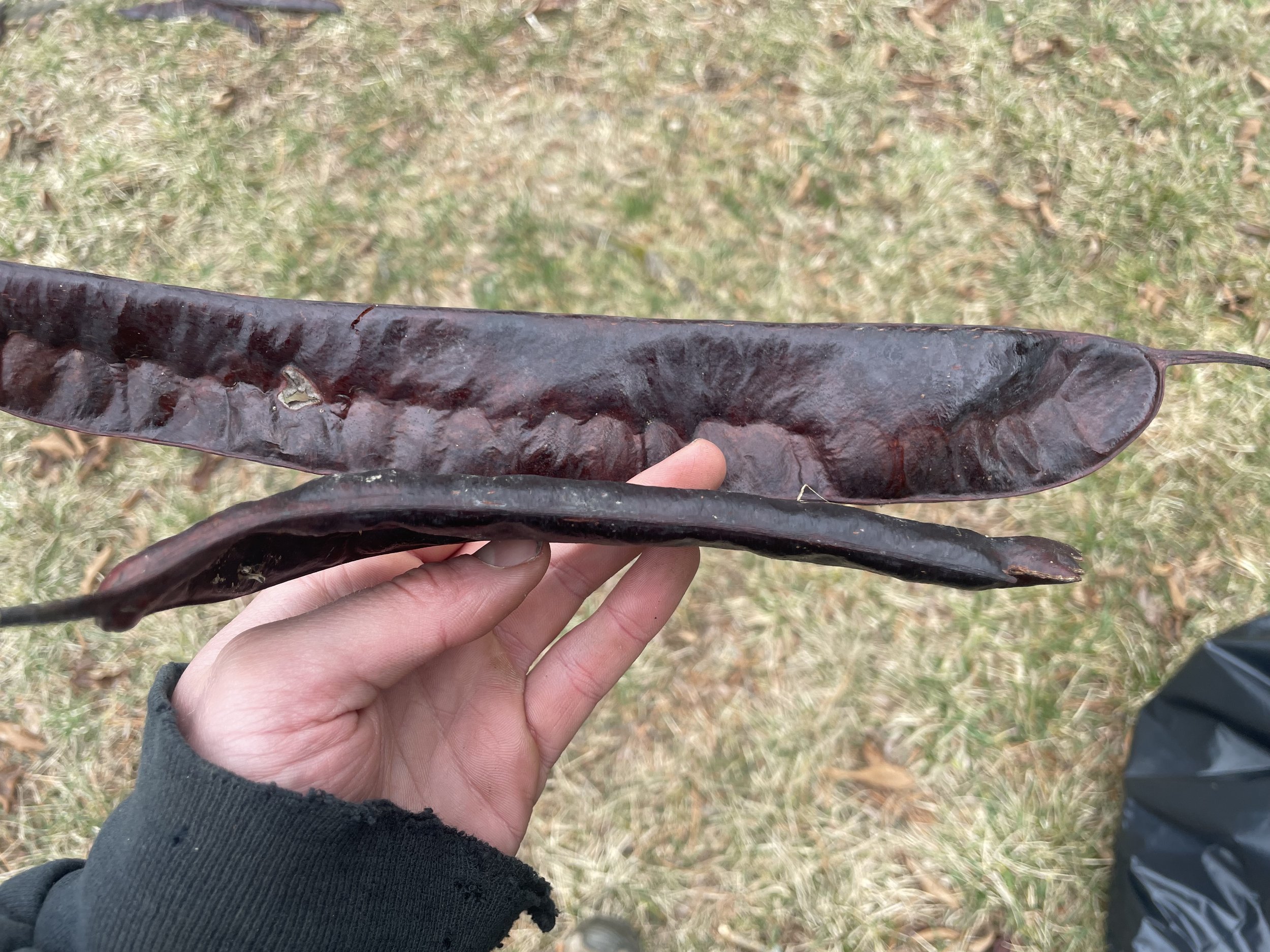 Image 5 of 8
 Image 6 of 8
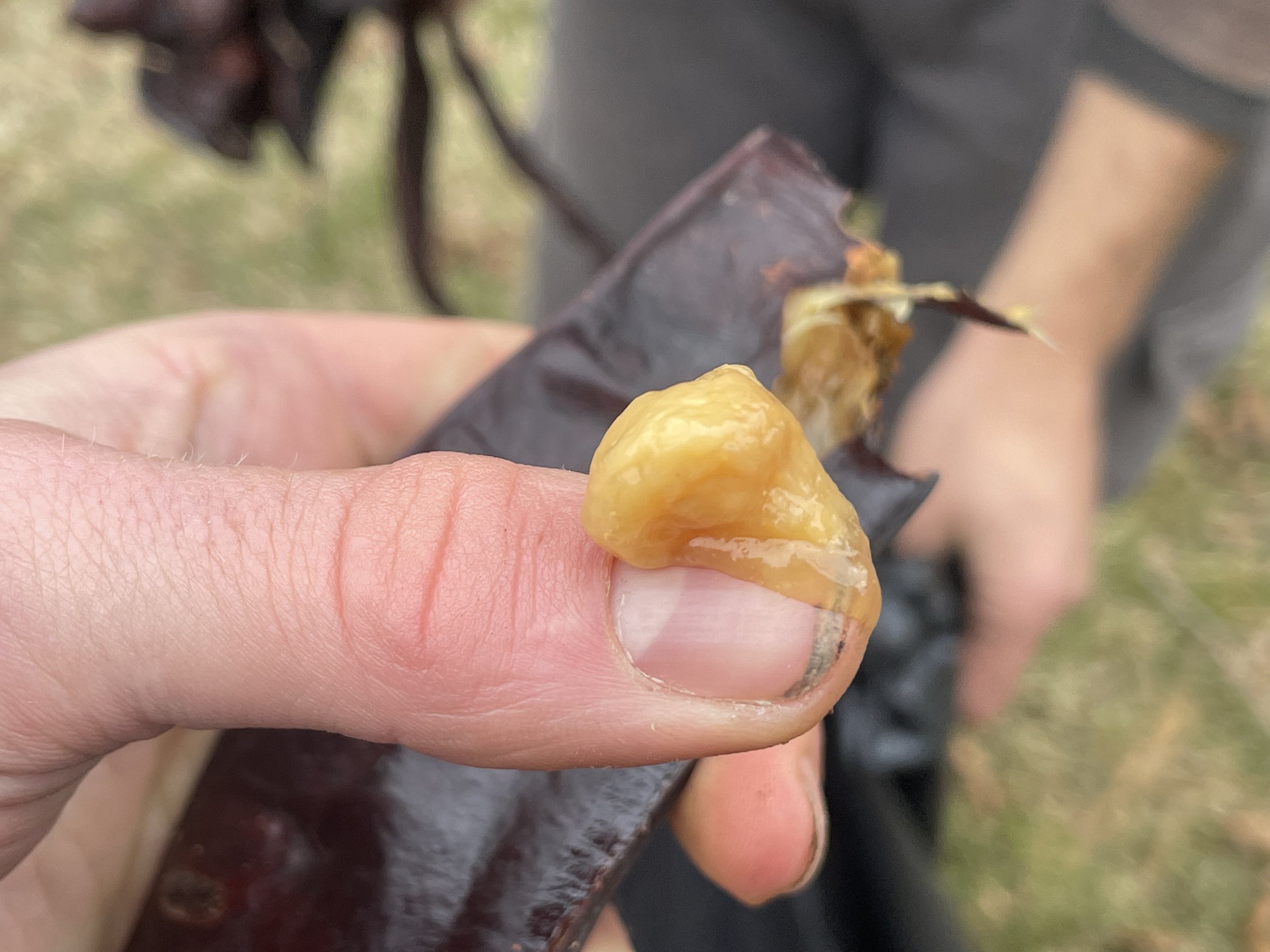 Image 7 of 8
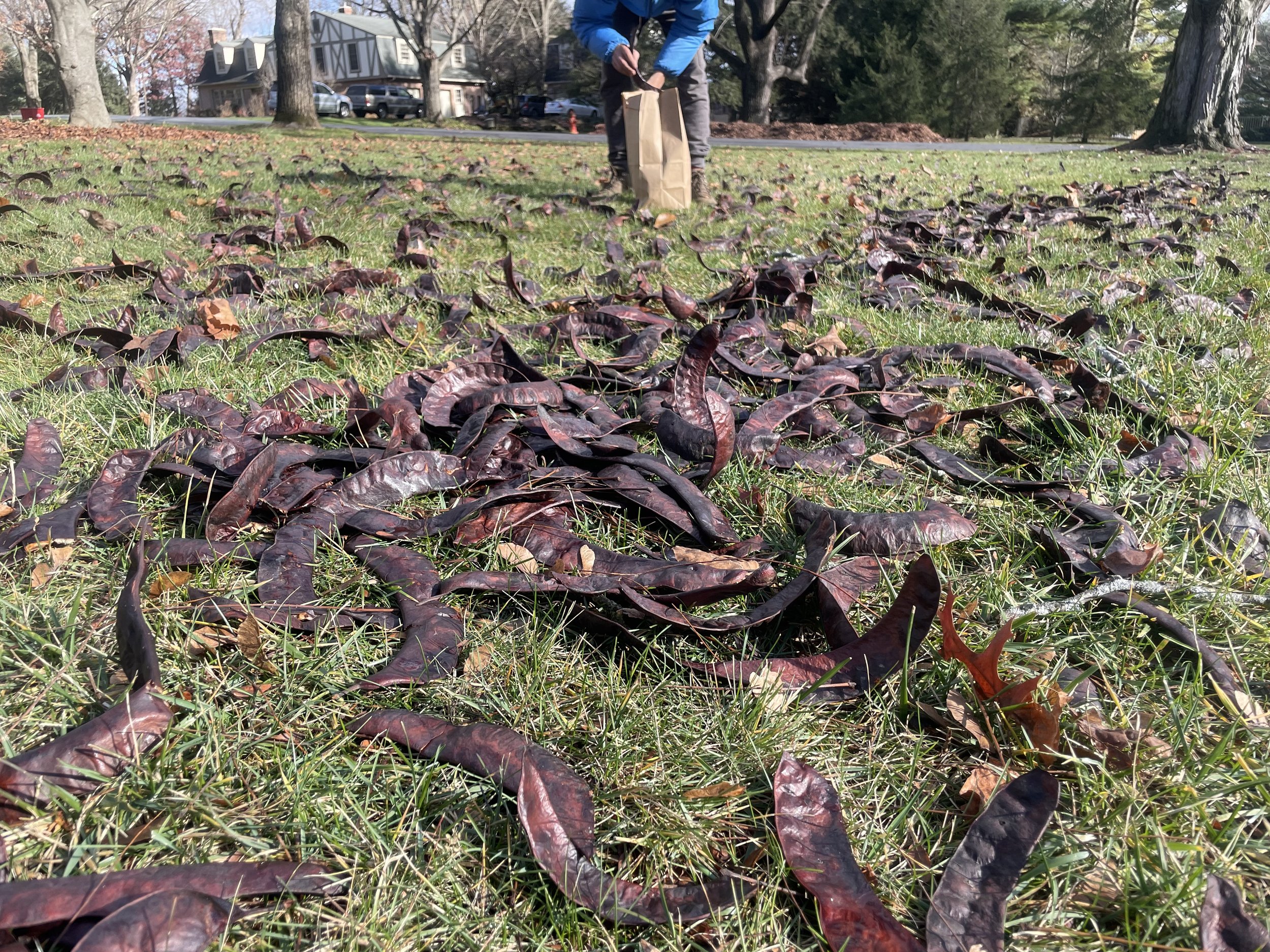 Image 8 of 8